Tuesday, 2 July 2013

Should the United States intervene in the Syrian conflict? ( July, 2013 )


It would be ill-advised indeed for the United States to intervene in the Syrian conflict. In the recent past  America and its allies have become involved in the following conflicts in the Middle East. When the outcome of each is examined, it will become evident that the lives lost and the financial cost were far from worthwhile.  

The Persian Gulf War (1990-1991)
 
In response to Iraq's invasion and annexation of Kuwait, American forces with coalition allies, under orders of President George H. W. Bush, entered Kuwait, expelled Iraqi forces and liberated the country. Subsequently, U.S. forces pursued the enemy back into Iraq, but stopped short of marching to Baghdad and deposing dictator Sadam Hussein. Kuwait was freed but the Iraqi regime still had to be dealt with. 

The Second Gulf War (1993-2010)
 
After the first Gulf War, the Iraqi government failed to cooperate with United Nations' weapons inspectors. It was reported that Saddam Hussein was amassing deadly chemical and biological weapons to use against his enemies. Coalition forces, composed mainly of the military from the United States and Britain, invaded Iraq, executed the dictator and overthrew his regime. No weapons of mass destruction were found.

A provisional Iraqi government was set up, but there was much unrest because of warring factions within the country itself. In 2010, U.S. combat operations officially ended. Troops which remained for the support and training Iraqi forces were withdrawn in December of 2011.

 Operation Enduring Freedom (2001 to the present)
 
In 2001, the United States, with coalition forces, invaded Afghanistan, with the intention of ousting the Taliban government. The conflict has become the longest war in which America has been involved. The present plan is for all U.S. troops to be withdrawn by the end of 2014. Tens of thousands of soldiers and civilians have lost their lives in this war.
 
Conflict in Pakistan (2004 to the present)

Nominally an ally of the United States in the War Against Terror, the citizens of Pakistan are the most resentful of the American presence of any group in the Middle East. National forces are in constant conflict with radical Islamic groups within its borders. Osama bin Laden, the leader of Al-Qaeda, was killed in Pakistan in 2011. The country is important because it is the main supply route for oil and supplies to NATO forces in Afghanistan, and it possesses nuclear weapons. The country is a major recipient of American foreign aid.

Intervention in Libya (2011)

 Under the direction of the United Nations, America and its allies intervened in the Libyan civil war, helping rebel forces overthrow dictator Muammar Gaddafi. Gaddafi was killed and a new Islamic government was set up. Islam is the religion of the majority of Libyans and there are continuing problems due to armed groups of extremists who disagree with policies of the present government.

The outcome of earlier interventions in the Middle East has been:
 
 1. Tens of thousands of deaths of American troops, foreign forces and citizens.

2. Tremendous financial cost at a time when America cannot afford it.
 
3. Resentment and ill will toward America and its citizens by those countries where the intervention has occurred.

 4. The continuing threat of acts of terrorism on the homeland because of this resentment and ill will.
 
Except for the death of Osama bin Laden and the liberation of Kuwait, it could be argued that nothing of value has been achieved by previous American interventions in the Middle East.

The majority of people in the area have been Muslim for centuries. Unfortunately, there are extreme elements in all religions. Most Middle Eastern people are accustomed to the laws, traditions and customs of Islam. This will change only when they themselves decide to change it.
 
Democracy cannot be crammed down the throats of the citizens of any nation. It's high time Western nations accepted that fact.   


Thursday, 23 May 2013

Haiku: Sunrise


Flee, pale stars of night!

Apollo's chariot climbs,

Forcing your retreat.

Wednesday, 22 May 2013

Haiku: Earthquake

Upper Earth rocks as
As Hades remodels his realm;
Chaos reigns above!

Sunday, 19 May 2013

Haiku: The North Wind


     Out of Arctic wilds
     A summer requiem is
     Howled by the North Wind.                                                                                 

Thursday, 28 February 2013

Grammar: tips on recognizing adverbs


The teaching of Grammar skills is presently making a comeback in the classrooms of the developed world. Educators have realized that the ability to form properly-constructed sentences is necessary if the adults of the future are to communicate effectively in both oral and written language. Knowledge of Grammar is also an invaluable tool when learning to speak or write in a foreign tongue.

Every correct sentence needs to have a subject and a verb. ( A verb is also known as a predicate.) These are the first parts of a sentence to be taught. A subject tells what the sentence is about; the verb or predicate completes the subject and is often an action word.

Example 1: The dog ran across the street.

The subject of the sentence is "The dog". The verb is, "ran across the street". This is a perfectly correct sentence because it has a subject and a verb. The next step is to isolate the bare (often one word) subject and verb.

With a little practice, even primary-grade students will soon be able to recognize "dog" as the bare subject of the sentence and "ran" as the bare predicate or verb. Now we add adjectives and adverbs to make the sentence clearer and more interesting.

Adverbs will answer the questions: how? when? why? or where? after the verb. Consider how the following sentence is more informative and interesting than the previous example.

Example 2: The frisky, brown dog soon ran quickly across the deserted street.

The adverbs are "soon" and "quickly". "Soon" answers the question "when?" after the verb "ran", and "quickly" tells "how?" the dog ran.

The adjectives, : "frisky", "brown" and "deserted" describe the nouns "dog" and "street". Both adjectives and adverbs are called modifiers and their purpose is to add interest and clarity to the sentence.

Adverbs can modify verbs, adjectives, or other adverbs, but they will always answer the questions: how?, when?, why? where? after the words they modify. These further refinements on the use of adverbs would not be taught until the senior grades of elementary school or the early years of high school.

Another useful hint in recognizing adverbs is to watch for words ending in "-ly". Suddenly, really, perfectly, poorly, happily, are adverbs often found in sentences.

Grammar is an invaluable skill which should be taught to students under the general umbrella of lessons known as "Language Arts". Knowledge of how to construct a correct sentence will be necessary whether their later education leads them to perfect their English expression or whether they attempt to master another language. In the global village we now inhabit, both possibilities are likely.


Tuesday, 18 December 2012

Haiku about oceans


Fist raised in fury,

Neptune roils the briny depths;

Ships roll in rough seas.

Etcetera: Haiku about cats

Etcetera: Haiku about cats:   Soft nose may nuzzle, Yet Puss reigns supreme. Beware!. Those sharp claws can wound.

Haiku about cats


Soft nose may nuzzle,
Yet Puss reigns supreme. Beware!.
Those sharp claws can wound.

Friday, 30 November 2012

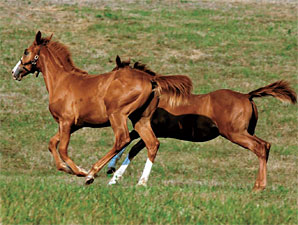
Haiku about horses


Racing with the wind,

Nostrils flared, tails aloft,

Pegasus' offspring.

Senryu about unicorns


Noah forgot you,

Gallant steeds with wondrous horns,

Vanished forever,

Haiku about potatoes

 
Leave your earthy womb,

Emerge to see the sunlight;

See me eyes to eye.

Tuesday, 27 November 2012

Senryu about sausages

Links of small piglets.

Lucious protein on my plate,

Rise to meet your fate.


Sunday, 25 November 2012

Haiku about fog


Pondrous dewdrops hug

Then droop to kiss the fields and

Greet the rising sun.

Friday, 23 November 2012

Do celebrity endorsements help sell a product?


Celebrity endorsements should have no effect at all on how well a product will sell. In fact, these types of testimonials ought to make a consumer extremely cautious about buying that particular product for the following reasons:

* Celebrities are not just regular "folks". For some special reason, whether it be attractiveness, athletic ability, lifestyle or other peculiarity, they stand out from the rest of society. Most consumers are astute enough to realize this. They also realize that because a celebrity endorses a product does not necessarily mean it will have the same effect on everyone.

If Grandma buys makeup endorsed by Lindsay Lohan, she will not end up looking up like the starlet and, at her stage in life, Granny knows this very well.

If Junior buys runners endorsed by Michael Jordan, he will not automatically become a basketball star. Today's youngsters, often gifted by doting parents and relatives, learn this at an early age.

* Celebrities must maintain elegant lifestyles in order to command continuing interest from their fans. These lifestyles are extremely costly. Savvy consumers know very well that celebrities are paid substantial royalties for their endorsements. Being only human, many well-known people can find it very tempting to endorse any mediocre product if it will finance a Caribbean vacation, or a beach house at Malibu.

* Every consumer should take a few minutes to research the background of the celebrity who is currently slogging a product. Chances are you will find that this icon of contemporary society has been involved in multiple affairs and/or marriages, has been charged several times with drug or alcohol offences, has been in and out of rehab programs and has participated in public feuds and displays of temper with current and/or past lovers, family members and friends.

If the celebrity in question was as ordinary as the gal or gal next door, you would probably have crossed them off your Christmas card list and unfriended them on facebook long ago because of their escapades and erratic behavior. Is it sensible now to accept their opinion unquestionably and spend your hard-earned money on something they claim to endorse? Can you even be sure they were stone-cold sober when they made the commercial?

Because of the current recession, most buyers watch every cent they spend to be sure they receive the best value for their hard-earned dollar. When considering the purchase of a new item, it is much more valuable to accept the recommendation or a trusted relative or friend.

Celebrities exist in the rarefied atmospheres of Hollywood, Broadway, and other exotic locations around the globe. Those of us in the real world will seldom agree with their tastes and preferences. Therefore, their endorsements are of little value to the average person. The savvy modern consumer knows this very well..


Friday, 16 November 2012

Signs you are a loner


 "The good and the wise lead quiet lives." - Euripides

Dictionary.com defines a loner as "a person who is or prefers to be alone, especially one who avoids the company of others." Loners are often referred to as introverts.  

 Actually, everyone prefers to be solitary at times, for respite, relaxation, to reflect on recent events, to daydream and make plans for the future. Keeping this in mind, how can you know if you are, in fact, a true loner? There are some specific indicators which can help you decide:

 * You seldom initiate communication with others. You don't phone, text, or write or visit unless it is absolutely necessary. Even then, you do much more listening than sharing your own thoughts or feelings. You are considered to be a good listener.

 * When you need to communicate, you prefer to do so in writing.

 * You have few friends and very few intimate relationships.. Such bonds may form slowly, and if a stranger joins the group, you may quickly withdraw.

 * When possible, you choose a job where you can work alone, preferably from home.

 * You have an unlisted phone number and hesitate to tell others where you live.

 * You seldom have plans for special days, such as birthdays, New Year's Eve, or Valentine's Day.

 * You have no desire to join facebook.

 * You feel uncomfortable in crowds, usually make excuses to avoid parties, and you often prefer to eat meals alone. When attending a group affair, you may well make an excuse to leave early.

 * Having to interact with a group of people for any length of time leaves you feeling emotionally and mentally drained.

 * Your hobbies and pastimes are activities that can be done alone, like reading, writing or doing handicrafts.

 * You prefer to make plans by yourself or with one trusted friend. You will only share events of your past, present or possible future with a close family member or with a true friend of longstanding.

 * When conversing one-on-one with a trusted friend or family member, you can be as vocal as anyone else, although you may need to pause often to collect your thoughts.

There is nothing wrong with being a loner. Throughout history, introverts have contributed much to society.

Among famous introverts are:  Warren Buffet, Rosa Parks , Charles Darwin, Al Gore, J.K. Rowling, Albert Einstein, and Mahatma Gandhi. Loners are frequently leaders: independent, possessing strong concentration skills, reflective, responsible, creative, able to think "outside the box", studious and smart. They can analyze and ultimately integrate complex information. They take the time and have the ability to do so.
 
 The world needs loners. However, it is important to remember that: " No man is an island", as John Donne observed. While valuing your introverted personality, you need to make an effort to remain in contact with other people as well as with contemporary society, so you can offer your specialized gifts and talents where they will be most beneficial.
 
"Who looks outside, dreams; who looks inside, awakes." - Carl Jung


Friday, 9 November 2012

Thanksgiving dinner: Make it yourself or order out?


When you look back on past Thankgivings, what do you remember most? The answer probably depends on your gender and the position you hold in the family. In my experience, the males enjoy many more pleasurable reflections on this holiday with its sumptuous dinner tradition at home than the females.


For days ahead of the big day, the house must be cleaned, the menu planned, the provisions and decorations bought, invitations issued if guests are to join the celebration, and suitable clothing planned and/or purchased for family members. In some households, a modern man may assist in these preparations, but the majority of the responsibility will fall on the wife or the significant female member of the family.
 

The real "fun" begins on Thanksgiving Eve. A mass of unprepared, raw vegetables are crammed into the fridge ready to grace the festive table the following day. Of course they need to be washed, peeled, cooked, chopped, mashed, sliced, garnished or whatever, before they are edible. Who will be gifted with this enjoyable passtime? Chances are it will be Mom and perhaps the older daughters, if the family is fortunate enough to have one or two.

 
The festive bird must not be forgotten. Most turkeys come frozen hard as rocks. They must be thawed, gutted, and stuffed before they go into the oven. A conscientious hostess must make the dressing from an old secret family recipe. It is considered cheating to take advantage of the excellent variety of instant stuffings available today.

 
Dare the cook offer comercially-prepared cranberry sauce? Maybe if it is partially concealed behind a mountain of mashed potatoes no one will notice.

 
Actually, the more daring of the domestic divas will be wondering if they can get away with store-bought pumpkin pie and ice cream for dessert. Perhaps if the main course is so delectibley delicious, no one will have room for dessert, but she can't count on it.   

 
So, the night before the big day is spent preparing stuffing which should contain some exotic ingredients to be considered truly memorable. Some ladies stay up late to get the bird stuffed and in the oven so it will cook for just the right amount of time if dinner is to be served at noon. However, her labors have barely begun.

 
Bright and early next morning, she will be back in the kitchen, basting the bird, peeling potatoes, and preparing the other vegetables as required. The older girls will be hounded into giving the environment a final vacuuming, dusting and general tidying up before the guests assemble.

 
Somehow, everything will come together and another Thankgiving dinner will pass. Then what? In many families, the males assemble in the family room to enjoy coffee, a visit, or doze, spending the next few hours relaxing and letting their dinners digest.

 
The females will clean the table, put the first load of dishes in the dishwasher, (if they are lucky enough to have one), pack leftovers into the fridge, and then start pulling greasy turkey parts off the skeleton to be served in a variety of ways the following week. One wonders how the ladies contain their delight at the opportunity to perform these enjoyable tasks! The creative ones may keep their excitement under control with a glass of wine or two.

 
When you look back on past Thankgivings, what do you remember most? It depends on your gender. The men will remember a tidy home, a delicious meal, good company, and a well-dressed family making an almost perfect holiday. The ladies- not so much.

 
Thanksgiving dinner: Make it yourself or order out? Given a free choice, all females, including this writer, would definitely vote to order out!


Wednesday, 31 October 2012

The key to successful aging


The key to successful aging is to pay as little attention to it as possible.    Judith Regan

Everyone, if they are fortunate enough, will experience the advantages and disadvantages of old age. Being a successful senior requires certain skills and attitudes that need to be developed throughout life. These qualities will not magically appear as the twilight years approach.

Family members will be among the first to notice when their elders begin to slow down. In time, Grandma or Grandpa will no longer wish to participate in the active activities their younger relatives enjoy. Older folks may repeat the same stories to the same person several times. Operating the latest gadgets may seem to be beyond their capabilities, and furthermore, they may exhibit no interest in learning to do so.

So how can one prepare oneself to "age gracefully", when family members and even the senior himself or herself, must admit that he or she is no longer in the prime of life? Here are a few suggestions:

* Maintain as many friends as possible who are your contemporaries. Since everyone is at the same stage of life, you will have many of the same interests. You can laugh together at the foibles of youth as well as your own age-related blunders.

* Develop interests which are enjoyable and can be done alone: reading, painting, photography, needlework, writing, or baking. Besides being satisfying hobbies, some of these activities produce unique gifts. When the young folks receive homemade cabbage rolls, lasagna, or a handmade sweater or afghan from you, they may decide that their elders are not so irrelevant after all.

* Become your own best friend. Give yourself permission to watch a late movie and sleep until noon, to enjoy your favorite snack often, without counting calories, to splurge on a bottle of perfume or on a visit to a spa. Get a personal DVD player and enjoy movie classics whenever you wish. These are your "golden years", and it's permissible to pamper yourself.

* Nourish yourself well, physically, mentally, and spiritually. Eat and drink wisely and in moderation, develop an appreciation of good art, music and literature, and attend the church of your choice regularly.

* Join a seniors' center or church group for seniors and participate in activities offered. You'll be socializing with people of a similar age while sharing activities, outings and adventures geared for enjoyment. As a dividend, you will not be left tired out for the next three weeks.

* Visit your doctor regularly. You need to maintain good health to enjoy these "golden years" as long as possible.

* Overcome your aversion to new-fangled gadgets and get a computer. They are really not hard to operate and they will be your window on the world. Enlist a patient younger person as a coach and have him or her write down instructions so you can practice on your own, at your leisure. Soon you'll have friends around the globe with whom you can visit any time, day or night, no matter what the weather.

Growing older, admittedly, has some disadvantages, but it also contains an excess of blessings which are sometimes too numerous to count. If prepared for properly, and eased into gently with a positive attitude, the twilight years can be one of the most enjoyable of all the seasons of life.

The other day a man asked me what I thought was the best time of life. "Why," I answered without a thought, "Now".            David Grayson


Friday, 19 October 2012

Haiku: Pumpkins


When harvest moons slide
 To earth, sharp blades transform them 
 To glowing icons. 

Saturday, 13 October 2012

Until I die

Friends and family

Have passed away,

Have moved away,

Have turned away,

Have faded away,

Have walked away,

Or run away,

And I am left to brood

In God's waiting room,

Until I die.


Friday, 31 August 2012

Five things a woman wants in marriage


Every little girl dreams of marrying a handsome, prince-like young man and living happily ever after. Sometimes, those wishes come true. Once committed, most women will work their hearts out to make their marriage succeed. However, there are certain qualities she will expect from the man she vows to love, honor and obey for the rest of her life. Among them are:

1. Fidelity

If a woman cannot trust her husband to be faithful in all aspects of their relationship, then the marriage is probably doomed to failure. Of course, physical fidelity is of the utmost importance. In addition, a wife should be able to trust that her husband will not discuss the problems and complaints, which arise periodically in any marriage, with outsiders. Ideally,  partners should be able to discuss difficulties openly and negotiate satisfactory solutions calmly and reasonably.    

2. Love

Physical intimacy is essential during the early years of marriage; however, as  time passes the importance of love manifested as a deep, abiding friendship and mutual respect becomes increasingly important. As years pass, either spouse may develop physical problems which limit the expression of marital intimacy. If the relationship has evolved to the phase wherein each one truly considers the other his or her best and most trusted friend, the marriage can survive whatever difficulties life presents. 

3. Partnership

 Most wives are willing to commit their all to make their marriage a success. However, few are foolish enough to accept one hundred percent of the responsibilities the union will entail. If the wife agrees to works outside the home to help support the family, the husband must be ready to share half of the childcare duties and household chores. The privileges and responsibilities of successful marriages are a fifty-fifty proposition.

4. Tolerance

No human being is perfect and every marriage will experience its share of bumps along the way. Each partner must try to be non-judgemental, to control his or her temper, and to allow a spouse extra space when he or she is having a bad day.  Temper tantrums, accusations, put-downs, and hurtful comments will be remembered long after any temporary irritation is forgotten. However, patience, kindness and understanding will pay dividends to the tolerant partner when the tables are turned, some day in the future.

 5. Humor

Women love men who can make them laugh. Most situations in life, which seem irritating or serious at the time, will also have a funny side, if one takes the trouble to look for it. Humor goes a long way dispel tension and dissipate anxiety. The wise husband will make it a priority to coax a giggle, a chuckle, or at least a smile from his spouse several times a day. From these comic-relief moments will spring the anecdotes both parties will recall with pleasure in the years to come.

 Admittedly, most young husbands are not handsome, prince-like beings, but their imperfections will be probably be overlooked if they try to adopt the above personality traits. In all fairness, young wives will not always look or act like perfect princesses either. That's when fidelity, love, partnership, tolerance and humor must be evident in the behaviors of both spouses.