Thursday, 31 May 2012

Tips for handling pressure at work


Stress is no stranger to anyone striving to earn a living in the twenty-first century. Long working hours, looming deadlines, fierce competition, unrealistic demands from supervisors and job insecurity are only a few of the items which routinely plague the contemporary worker.

Left unaddressed, these factors, over a period of time, will result in loss of productivity, and an increased number of absences due to illness, accidents and emotional problems. Further consequences will involve family break-ups, relationship difficulties and mental illness. Not even machines can operate continually in high gear.

Management strategies for work-related pressures are best undertaken by individual employees. Corporations and executives are chiefly motivated by the all-important bottom line: profits.

Here are a few tips workers can use to keep cool at work, even when the pressure reaches maximum intensity:

* Get sufficient rest. Everything seems worse when you're tired, Arrange your life so that you get at least 8 hours sleep before every work day. Only disrupt your schedule for a very important reason.

* Leave time for a relaxed morning routine. Have a healthy breakfast, look at a newscast on TV. Reflect that your job is, in reality, only a tiny part of the events and drama taking place around the globe.

* Plan ahead. Have in mind what you want to accomplish that day, a major goal and perhaps some secondary ones. Write them down if necessary. You'll be rewarded with a feeling of satisfaction if you manage to achieve even the most important one.

* Be comfortable. Dress appropriately and neatly in clothes that fit comfortably. Wear suitable shoes. You can't do your best if your feet hurt. You are there to use your skills and abilities for the benefit of your employer. You are not competing in a fashion show.

* Be organized. Keep your desk and workspace neat. Do one thing at a time and only move on when it's completed. Keep your list of goals handy and check each off when it's completed.

* Avoid conflict. Be pleasant and cooperative with everyone, but refuse to get involved in gossip, office politics, or heated discussions. Hostility creates tension, and that's what you're trying to avoid.

* Take a walk at lunch. Get out in the fresh air, weather permitting. Pick up a few things at a store, meet a pal for coffee, go home and let the dog out. Take your mind off work, however briefly.

* Keep your priorities straight. Your family comes first. Jobs may come and go but they will be with you for life. If you damage your physical or emotional health through overwork, they will suffer. Not only will they miss your financial contribution, but more importantly, your cheerful companionship and emotional support. For their benefit, you must maintain stability and balance in your life.

As you leave the workplace, check your goal list, then discard it. You've probably had a pretty productive day.

On the way home, think back to the newscast you saw in the morning. You might have spent the day dodging bullets on a bloody battlefield, or running from a street gang in a crowded inner city. You could live in a third world country, be deathly ill with no medical help or medicine for miles.

Come to think of it, that job isn't so bad after all, is it?


Funny U.S. Laws


Every jurisdiction in the world has laws which seem outdated and sometimes even ridiculous. Some were enacted years ago and no one has ever bothered to remove them. Others have been left in place in case they might become relevant again in the future. Still others, I suspect, have been left on the books just to provide a chuckle to anyone who wants to peruse every single piece of legislation ever enacted in that area.

Here are some of the strangest laws still in effect in the United States:

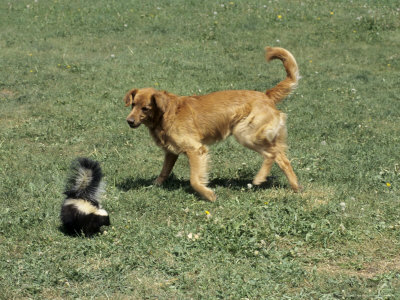
* In Minnesota, it is illegal to tease skunks.

It is not only illegal, it is also stupid.

* In Oklahoma, people who make "ugly faces" at dogs may be fined and/or jailed.

If you're naturally unattractive, must you wear a mask in front of your dog?

* In North Carolina, it is illegal to have sex in a Churchyard.

I suspect the punishment would be more severe if there is a funeral in progress at the time.

* In Montana, it is a felony for a wife to open her husband's mail.

However, if it just happens to open as she holds it over a steaming kettle...

* In Omaha, Nebraska, if a child burps during a church service, his or her parents may be arrested.

They probably wonder why only elderly people attend church in Omaha.

* In Tennessee, it is illegal to use a lasso to catch a fish.

You can use a hook, a net, a spear, a bucket, a knitting needle, a pickle jar, a strainer, but not a lasso.

* In Columbus, Georgia, it is illegal to sit on one's porch in an indecent position.

Back straight, feet flat on the ground, knees together, shoulders back, head up; got it?

* In Texas, it is illegal to milk another person's cow.

And don't give me that old story about the animal being a stray who just happened to follow you home.

* In Lebanon, Virginia, it is illegal to kick your wife out of bed.

You can push, pull, shove, roll, heave, nudge or butt her out, but don't you dare kick!

* In Vermont, women must obtain written permission from their husbands to wear false teeth.

Would he prefer to watch her gumming her way through life?

Perhaps there should be an official "Records Officer" appointed for each state to delete all out-of-date laws, or to bring them into conformity with modern practices and customs. Then again, that would be yet another civil servant to drain the already anaemic public tax coffers.

As  Mark Twain observed, "Humor is mankind's greatest blessing". Let's just leave them the way they are.

Monday, 28 May 2012

Have you met the blue-footed booby?


Why would I want to?", you're probably wondering. Well, these seabirds have several interesting features, besides their comical names, and you must admit the topic would be a great conversation opener.

The booby gets its name from the Spanish word "bobo" meaning a stupid fellow. And this goose-sized seabird really does have bright blue feet. He's very clumsy on land and appears fearless of humans, which makes him seem very vulnerable, and not too smart.

Habitat

The blue-footed booby is found on the Galapolos Islands, and on other islands off the western coasts of northern South America, Mexico, and tropical America, from the coast of California to southern Peru.

Description

It has a white body, a brown and white-streaked head, a blue-grey face, a blue tapered bill, a long neck and brilliant blue webbed feet. It is a little less than a meter long and has a wingspan of almost 1.5 meters. It can live as long as 17 years.

Feeding

It feeds singly or in a group and eats only fish. It glides smoothly over the waves, keeping its beak at a downward angle. When it sees a fish, it dives gracefully into the water, barely making a splash. It can also dive from a sitting position on the water's surface.

When in a flock, the first bird spotting a fish gives a whistle to alert the others, and they follow him, diving in perfectly synchronized movements.

Reproduction

The blue-footed booby may breed any time of year. During the mating ritual, the male bird shows off his feet to a possible mate by doing an exaggerated high-stepping strut. The bluer the feet, the more attractive he is. Then he presents nest materials to the female. After a brief courtship flight, mating occurs.

The female lays two or three light blue eggs in a shallow depression in the flat ground. The parents use their webbed feet, which have an increased blood supply, to cover the eggs and keep them warm. The young hatch in about 45 days. The female balances them on top of her feet for the first month of their lives.

Both parents feed the young continuously by regurgitating fish and allowing the chicks to remove it from their bills. It there is a food shortage, only the largest chick is fed. Chicks stay with their parents about two months

Conservation

The blue-footed booby is legally protected on the Galapagos Islands, where there are about 20,000 breeding pairs. Other populations, numbering about 20,000, are slightly in danger because of egg collectors.

Now that you've been introduced to the blue-footed booby, you must agree it's an interesting bird. As you share information about its habits and lifestyle, you should be guaranteed at least five minutes of attention from even the most reticent conversationalists.


If you hate to speak in public


Hate it or not, the ability to speak well in public is a necessary skill for anyone wishing to get ahead in the world of business, politics, or any field of endeavor today. The twenty-first century is the age of effective communication.

Consider the charismatic figure of Barack Obama during the 2008 presidential election campaign, striding across numerous stages and platforms all over the country, electrifying audiences with fiery, stimulating public speeches. Would he have won the presidency without this talent to connect powerfully and positively with many people during a single presentation? Probably not.

Admittedly, few of us will reach the skill level of President Obama in addressing groups of people, but there are simple steps which can be mastered by anyone to assure success. The projected audience may be large or small, young or old and the settings vary from a college classroom, to a boardroom, to an elaborate auditorium. By following these guidelines, you'll do well in communicating before a group.

1. Know your material, but don't try to cram everything you know into your speech. Several main points, with background information will be sufficient. Information overload will not be helpful to your audience. Plan for a question period later when additional points may be addressed.

2. Choose a topic you're interested in and are enthusiastic about. The audience will catch and reflect your enthusiasm.

3. Practice, practice, practice. Rehearse aloud, use a tape recorder, speak in front of a mirror and before friends and family members. Speak slowly. Vary your tone. Insert pauses after critical points. Make up cue cards with bullet points in large font as back-ups, but know your material well enough so that you won't need them.

4. Be well-groomed. Wear something comfortable, yet neat and professional-looking.

5. Arrive early; walk around the speaking area. Practice using the microphone.

6. Engage in positive self-talk. " You are going to be great! You have something worthwhile to share and these people need to hear it." Visualize yourself giving the speech. Imagine speaking loudly, clearly and confidently, and the audience applauding.

7. Take several deep breaths before beginning. Pick out two or three friendly faces in different sections of the audience and attempt to keep eye contact with them. Try to look natural. Move around, use gestures.

8. Think of the audience as your brothers and sisters. They want you to do well. They are glad it's you up there and not them. Concentrate on helping them, by getting your message across as clearly as possible. Think of them, try to forget your nervousness.

9. Be aware of time limitations. The sustained attention span of the average adult has been estimated to be about 20 minutes. After that, you're probably talking to the walls. Be direct, be clear, be finished.


10. If a follow-up is needed, arrange for a question period, small-group discussions, a video or slide presentation or refreshments and perhaps a written evaluation of the evening.

Being a confident, charismatic speaker will be an important asset for whatever career path you choose. The most important factors for success are experience and practice. If you feel you need extra help, join the local Toastmasters Club. It is an organization which has helped millions of people hone their speaking skills and overcome their nervousness about speaking in public.

Check the Toastmasters World Headquarters web site to find a club in your area.

http://reports.toastmasters.org/findaclub/


Unique and creative gifts for seniors


Since I am a senior, I have a few suggestions to offer. I'm in my seventies, so I speak from experience. One thing to remember, please don't ask me on the spur of the moment what I want; I won't be able to think of a thing. Many of us older folks have well-seasoned minds which work just as well as they ever did, but perhaps a bit more slowly. I like to think that's because there's so much knowledge, and so many memories stored in there, it takes a while to locate the appropriate information. Here's what I'd really like for Christmas:

1.) A family Christmas Day celebration, in which nobody's fighting and everybody shows up. Even if everyone is not feeling totally amicable, could you just pretend, for the sake of your dad and me? We may not all have that many more holidays together.

2.) You know those grocery list pads that stick on the fridge with a magnet? I could use a dozen of those! See earlier comments about slow memory. I forgot to mention forgetfulness.

3.) We got a VCR last year, but never figured out how to work it. I would love a certificate for one hour of someone's time to explain it again very slowly. See that I take notes to refer to after you leave. Make me set it up myself several times so I really understand.

4.) I would love to get involved with E-Bay! Hey, I think I could even start a little business buying and selling stuff on line. Since the computer and I are hardly what you'd term "well-acquainted", that would cost some generous soul an hour a week for a month. I hope you don't think that's being greedy; you know I'd share any profits with my grandchildren.

5.) Speaking of grandchildren, we love it when you drop in with them for a visit. I realize everyone's busy with their own lives, but could you commit to a visit, say, every two weeks? A note to that effect under the tree would make it seem that Christmas was going to last all year.

6.) I've started back to Weight Watchers on the urging of the doctor. You know what? All the scales in Canada show your weight in kilograms- what a crock! I need a scales that weighs in pounds. I know that would entail a trip over the border for someone, but I'd really appreciate it; so would the doctor. He gets really grumpy about the weight issue.

7.) Our dog is getting on in years, just like us. Soon it will be time to send her to that big kennel in the sky. I don't have the heart to take her on that last trip to the vet. I worry about your dad, with his heart condition, having to do it. Could one of you offer to take her when the time comes? We would be forever grateful.

8.) I miss the days when we were all together and life was busy and interesting. Remember how I used to nag you all about always being on the phone. I think at one point we even had a schedule as to who could use it when. You can phone as much as you want now- please do. I`ll even be glad to get e-mails! I am a thoroughly modern mom. (Well, almost-)

9.) If you`re bound and bent on buying something, anything warm and fuzzy would be most welcome- slippers, a robe, a sweater. Please stick to bright colors, just because we`re getting on doesn`t mean we have to be totally dull.

10.)Sharing your time, your attention, and your lives with us is the best present you can give. You have already gifted us by becoming fine upstanding adults of whom we can be very proud. We never tire of relating your kindnesses and your accomplishments to our friends. We sincerely hope that when you become seniors you will be fortunate enough to have children as loving and caring as ours are.


Tips for a beginning writer


To write professionally is a privilege, and also a responsibility. These two facts must be kept in mind whenever you take pen in hand or sit down at the computer to share your thoughts, opinions or stories with others.

Writing professionally is a privilege because others are taking time out of their busy lives to read your words. They may have paid to purchase a publication containing them. They have made a judgment that what you have to say is important enough to merit their consideration. You are privileged to have gained the attention of strangers, who are ready to share your thoughts.

Because of this privilege, you, as an ethical writer, have certain responsibilities. Here are several:

(a) The research you do for articles and essays for must be thorough and accurate. It is wrong to give your readers false or misleading information. You should not make inferences on matters which can be easily researched to obtain factual information. Total truth and honesty is a must, and will gain you faithful and trusting followers.

(b) Proof-read your work several times carefully. Editors and readers can easily begin to doubt your ability if you have failed to master the basics of your mother tongue.

(c) Keep a dictionary at your side. Check to be sure you have the correct meaning of sound-alike words: i.e. their, there and they're.

Don't plan to begin by writing the novel of the century. Start small. Write a " Letter to the Editor" of your local newspaper. Submit an article to the "Seniors' News" or other local publication. Write a blurb about an upcoming event for your church bulletin. With every acceptance your confidence will grow.

A next step may be to submit an op-ed piece to the Editorial Pages of an area newspaper that accepted guest columnists. Be sure to check the publication's web site for writers' guidelines. You may receive a small payment for your efforts. This will be a major thrill if you are hoping to launch a new career.

If your talent is fiction, begin with short stories. Every Spring and Summer many newspapers in larger urban centers have contests to gather notable short fiction pieces. The winning stories will provide their readers with material for leisure reading during the holidays. The prizes are often worthwhile and your fame as a freelance writer will grow with every piece you have published.

At this point, I recommend that you invest in the current year's edition of "Writer's Manual". It's a fat, soft-cover book which lists everypublication in North America which accepts freelance articles. It also lists book publishers, tells you how to write an effective query letter, and contains more helpful information than I can even begin to disclose here. Just about everything a neophyte writer needs to know may be found between its covers.

Now you're ready to begin your career. Set a definite time each day for writing, and stick to it, except in the most dire emergency. Start submitting your articles and stories. One suggestion: keep records of what you send where. It is a little embarrassing to receive a note from an editor telling you that you sent the same article to him three times.
As in all areas of life, a sense of humor is a valuable asset. Be sure to nurture yours.

One final thought: as much as you may love writing, try to reserve at least one-quarter of your waking hours for just plain living. Go to interesting places with people you like and interact with family and friends. Even the most talented author needs people, places and experiences about which to write.

The myth about the talented author shut away for weeks in a cold garret writing his masterpiece just doesn't happen anymore. Get out there in the world. Live, love, play, observe and listen. Then come home and share your experiences, and the insights they provide with others, through the printed word. This is your privilege as a professional writer. Be sure to exercise this privilege responsibly.


The nutritional value of pears


Pears have been cultivated in China for at least 3000 years, and are believed to have spread east and west from there. There are records of pear orchards in Ancient Greece: the poet Homer ( circa 900-800 B.C.) referred to them as "a gift from the gods". Homer knew whereof he spoke; this fruit, which comes in many varieties, is a beneficial addition to any food plan.

Pears are flavorful and come in their own nutritious, edible package. Simply rinse under running water and enjoy! There is more levulose, the sweetest of the natural sugars, in pears than in any other fruit. No wonder they make a delicious snack! And, besides tasting good, this fruit is good for you.

One medium pear has about 100 calories and is a good source of fiber, vitamin C, potassium and folacin. It contains no sodium, no cholesterol, no saturated fat. It's a natural quick source of energy. Because of the high fiber content, this fruit makes you feel full faster, so it is helpful in weight-reduction regimens.

Unlike their cousins, the apple family, pears should not be allowed to ripen on the tree. They should be harvested when mature and allowed to ripen at room temperature. They improve in both taste and texture after being picked. The ripe fruit should be stored in the refrigerator. A ripe pear is quite firm, but will give a little when pressed gently.

Pears can be eaten fresh, canned, poached, dried or as juice. They can be used in jams, jellies, cakes, pies, tarts, crisps, dumplings, sherbet, and even pasta and main-course salads. Fermented pear juice, "perry", will be of interest to those who enjoy an alcoholic beverage.

Pears are the least allergenic of all fruits. For this reason, they are popular with allergy sufferers, and are often among the first solid foods introduced to infants.

Wood from the pear tree is one of the preferred materials for carving, for furniture construction, and for making high-quality woodwind instruments.

It well may be that Homer, on a chilly night in Athens long ago, warmed himself by a fragrant fire of pear logs , and mused that such a useful and versatile plant as the pear tree must indeed be "a gift of the gods" to humankind.


One story homes have a better resale value


A century ago, large families were in vogue. Mothers were homemakers, fathers went to work to support the family, the older children helped with chores, went to school and looked after little brothers and sisters in their spare time. That was just the way things were.

Then, large families were needed to help with farm chores, or in the family business. Having many children was the parents' old age insurance, in the days before Social Security. Large sprawling houses were built to accommodate the quickly-increasing broods..

Today the trend has changed. With the improvement in contraceptive methods and the appearance of the birth-control pill in the 1950's, family size began to shrink, as the numbers in the work force began to grow.

During the World War II, many men joined the armed forces and women began to take their places in the domestic labour force. When the troops returned, many women kept their jobs and their husbands returned to work as well.

Through the years, the economy grew, and salaries increased with it.

As a result, families soon had larger disposable incomes, and many chose to save for a down-payment on large, luxurious homes with amenities that their mothers and grandmothers could only have dreamed about. Admittedly, the mortgage payments were large, but with both spouses working, they could just manage to meet them.

Fast forward to 2008. The recession hit. One or both spouses lost their jobs and couldn't meet the mortgage payments. The bank foreclosed on their loan and they were forced to file for bankruptcy.

They have lots of company. The recession, which may well become a depression before it's over, is world-wide in scope.

When the dust finally clears, what will the housing market of the future look like?

Many families will find themselves starting over and beginning anew to build their financial resources. This time they will look for smaller, more reasonably-priced living accommodations. With the trend to smaller families, bungalows will provide sufficient space for everyone.

The baby boomers will be reaching retirement age. One-story homes, with fewer stairs, will be most attractive and will relieve the strain on arthritic hips and knees. Bungalows are also easier to clean and maintain. Cleaning eaves troughs and polishing second-floor windows is a challenge those middle-aged and older.

What of the younger generation? Many of them have eschewed marriage and instead embarked on a series of "relationships", in an effort to discover their true soul mates. These temporary liaisons are best carried out in apartments, just in case they don't work out.

By the time the younger generation finally decides to settle down, both partners will be approaching middle age. Bungalows will be very attractive to this group also. If they decide to start a family, everyone will still fit handily into a one-story home.

Just as family size has changed in the past century, so has preference in housing. The post-recession house that will sell quickly and easily will be a single story, low-maintenance model with lots of labour-saving features.

The average buyers will be in their mid-thirties or older, career-oriented, and hoping to find a home in which to be comfortable until they reach their sunset years. One-story homes, up for resale, won't last long in the post-recession real estate market.


The Art of Waiting


Hardly anyone regards waiting as an art these days. It's usually regarded as a nuisance, an inconvenience, a hardship imposed by someone who is either thoughtless, self-absorbed, arrogant, thick as a brick, cheap, or perhaps a combination of all the above.

The occasions on which we are expected to wait patiently are numerous: in the doctor's office, the check-out at the grocery store, at traffic lights, for friends who are punctuality-challenged, even on the telephone "until one of our representatives is free to talk to you". To add insult to injury, during these calls, you're often subjected to scratchy, elevator-type music.

The result? Like most people, you probably grit your teeth, tap your foot, glare at anyone in the immediate area, and think nasty thoughts of what you'd like to do to the individual or the company inflicting this hardship on you. Your blood pressure rises as you think of how late you'll be for the next event on your busy schedule. You may even feel the beginning of a tension headache.

Can the irritation of waiting be turned into an art, a skill by which that seemingly wasted time is put to good use? With a little foresight and creativity, it may just be possible.

* Pray. Tell God how angry you feel. Ask him to remove the logjam that's holding you up. Ask him for patience. After all, that's what friends are for- to help out during stressful times.

* Carry your current paperback with you. It will be better than looking at out-of-date magazines in whatever office you happen to be presently stuck.

* Start a conversation with the person nearest you. Everyone has a story, his or hers may be more interesting the those heard on "Survivor", or "Desperate Housewives".

* Carry a pen and small notebook. Make a list of groceries needed, things to do, goals for the day, the week, or the month, a Christmas card list, ideas for gifts for friends and family, places to go and things to see before you die. Reminders... anything you want to remember.

* In your imagination, travel one year into the future. How would you like your circumstances and life to be different by that time? Would you like to be thinner, have a different car, a new home, a pet, a spouse? Think of effective steps you could take to move toward this goal. Write them down.

* Notice the most attractive person in your vicinity. What particular mannerism, item of clothing or feature made you select that individual? Could you incorporate that particular quality into your personal domain, or suggest it to a family member?

* Are you a fledging poet? Start a piece on waiting, frustration, wasted time, traffic, modern inconveniences, whatever topic tickles your fancy.

* Mentally picture the person who's making you wait. Compose a short story in which s/he gets their just desserts. According to how angry you are, you can make them suffer a lot, or just a little. Make notes and write your creation up in full when you get home. Who knows? You could win a prize for the best short story! Your heartfelt emotion will be sure to shine through the prose.

Perhaps it's time to rethink our contemporary attitude about waiting. Perhaps it can be transformed into an art, and heaven knows, we have ample occasions to practice in the course of everyday life.

Folks today are often heard to complain that there just aren't enough hours in the day to get everything done. If we learn to utilize waiting time constructively, we might just find that the days are long enough to get everything done, after all.


Sunday, 27 May 2012

Reasons to stop driving


My friend recently lost her driver's license because of neurological problems. She was extremely upset. As a widow, living alone in the suburbs, the car was as useful to her as one of her arms. She was out and about in it daily, visiting, shopping, volunteering, and going to doctor's appointments, the library, and church. It would be a major adjustment to have to manage without it.

We put our heads together and tried to make logical plans. At our ages, all of our friends would face this step eventually. She could be a trailblazer. Maybe we could help them avoid major pitfalls. To this end, I took notes.

The first step was painful: she had to sell the house where she had raised her children. She moved to a small but fully equipped apartment near a mall. Once she was settled, we decided to note the positive aspects of her new situation to encourage those who would be following in her footsteps. The advantages soon became obvious:

1. She had much more disposable income. She no longer had to pay for gas, repairs, car insurance, parking fees and the multitude of miscellaneous expenses that go with car ownership. She gave her late-model car to her oldest grandson. In return, he promised to take her grocery shopping every week, and carry her packages into the apartment. He was so overjoyed to get the car, I think he would have agreed to carry her in and out too!

2. She had more time to relax. She lost the compulsion to plan activities for every day. She began to sleep in later and actually took naps on blustery winter afternoons, instead of risking life and limb on icy roads. One of her grown sons remarked: " Gee Mom, you're finally starting to grow old gracefully."

3. She gave up outside volunteer work. Instead, she found several elderly, fellow residents who had few or no family members. She took them under her wing and received more satisfaction and felt more valued than she had in her former volunteer activities.

4. She took taxis to doctor's appointments and the library. Now that she actually had time to read every book, she became more selective in her choices, even including a few of the classics she had always avoided. Financially, even with taxi fares, she was still miles ahead. She didn't need to worry about finding parking places either- a huge bonus.

5. Along with her mental enrichment, her physical stamina improved. Whenever she felt the stirrings of cabin fever, she walked to the coffee shop in the mall across the street. She was soon on speaking terms with the regulars, and is in the process of forming several interesting new friendships.

6. She found out who her real friends are. They frequently take her out for meals, gatherings, or evenings of entertainment, then bring her home again.

7. Church members in her area pick her up for services and return her home after. The congregation has a "Ministry to Shut-ins" group which ensures that she has as many visitors as she wishes.

8. With the excess funds from the sale of the house, she can afford holidays about which she had formerly only dreamed. Presently she is trying to decide between a cruise in the Caribbean with a friend, and taking two of her grandchildren for a week at Disneyland.

After our friends read our list, they sometimes decide to make the momentous move, sooner rather than later. Adult offspring, residing in basements, have been strongly encouraged to move out. My friend will soon have some of our circle as neighbors in her new residence.

Now, if you'll excuse me, I have an appointment with a real estate agent myself.


Treatments for plantar warts


A plantar wart is a non-cancerous growth caused by the human papilloma virus (HPV). It occurs on the sole or toes of the foot. It is often shaped like a cauliflower with a small black spot visible in the center.

Because of the pressure from standing and walking, the wart grows more inwardly than outwardly, and a layer of thick skin builds up on the surface.
To the sufferer, a plantar wart is painful and ugly.


These viruses are spread through direct contact. They are found on warm, damp walking surfaces such as those in locker rooms, showers, and swimming pool change rooms. They can also be caught by sharing shoes or socks. They gain entrance to the body through tiny cracks in the human foot of which the owner may not even be aware.

If you suspect you have a plantar wart, you should consult your doctor to make sure it is, in fact, not a more serious condition. He can also treat the wart. Sometimes a person's immune system will eventually destroy it, but the process can take up to two years. There is also a chance that, instead of getting better, the wart will spread.

A plantar wart can be a challenging affliction, but the doctor has several treatment options:

* Salicylic acid. This can be purchased over-the-counter in a drug store and applied daily either as a patch or in a solution. The dead skin must be rubbed away either with a nail file or a pumice stone each day. This method may take about four weeks.

* Cryotherapy. The doctor can use liquid nitrogen to "freeze" the wart and a blister is formed underneath it. This method may be painful and frightening for children, but if it works, you'll get results more quickly

* Duct tape. Apply a piece of duct tape, a little larger than the wart, over the top of it. This will deprive it of the oxygen it needs to survive. After six days, remove the tape and clean the area. Use a nail file or pumice stone to remove dead skin, then reapply the tape. This method may take six to eight weeks.

* Surgical removal with a laser. This procedure is expensive and may be painful. Multiple treatments are needed, usually four to six, once a month until the wart is gone.

* Surgical excision. This method is quite effective but will leave a scar. If the wart recurs, you'll have the wart plus the scar.

* Immunotherapy. The doctor injects antigens directly into the wart in an attempt to trigger a response from the sufferers' immune system which will attack the virus causing the wart.

* More modern chemotherapy treatments are being tested and becoming available all the time.

The virus is highly contagious. Guard against spreading it while you're being treated and waiting for your plantar wart to disappear.

The treatment that will be effective varies with each person, and studies have shown that none of the above treatments was more than 73% effective. In fact, 23% of patients treated with a placebo had their warts disappear.

It may be concluded that the best way to guard against getting a plantar wart is to follow a healthy lifestyle, to keep your immune system strong, and to avoid walking in bare feet in public areas, such as showers and changing rooms.

As additional precautions, do not share shoes or socks with anyone, and avoid touching warts on other people.

Fortunately, we acquire immunity to warts with age, so the infection is more common in children than in adults.


What is a leprechaun?


Every Irish child has tried to find the end of a rainbow where folklore tells that a leprechaun has hidden his pot of gold. Strangely enough, those who succeed in following the rainbow to its origin always discover they've chosen to search at the wrong end. No one has ever been able to reach both ends of the same rainbow before it fades from view. Of course, this whole story may be just another of the tricks these mischievous little Irish elves love to play on humans.

Leprechauns are mythical little male fairies about two feet high, who live in Ireland, sometimes in farmhouses or wine cellars. They have rosy red noses and cheeks, pointed ears, and dress in little green suits with black bowler hats. They usually wear leather aprons because they work as shoemakers, making footwear for the other elves and sprites in the Emerald Isle. You will always see them with handsome, shiny, black boots with silver buckles. They are very good at their trade, and make the best footwear for themselves.

Legend has it that long ago the Danes plundered Ireland. They left their gold with the leprechauns to guard and never returned to claim it. The little men put it in pots and buried it, but they must give it up to anyone who captures them. The wee creatures are very clever, and hardly ever have they lost one of the pots of treasure. Pay attention now and I'll tell you some secrets which will give you the best chance to catch one.

First you must travel to Ireland. Go out into the green hills and fields. Every now and then put your ear to the ground and listen for the sound of a cobbler's hammer. When you hear it, approach very quietly. If he hears you, he'll run away. If you manage to sneak up, grab the leprechaun by the arm and hang on tight. Because you're larger, you'll be much stronger, but a leprechaun can be very wiggly when he's cornered.

At first, he'll try to bribe you to let him go. He'll pull out a pouch with a silver coin and offer it to you in exchange for his freedom. Don't take it. As soon as he's safely away, the silver coin will magically return to the pouch in his pocket and you'll be out of luck.

Next, he'll pull out another pouch and offer you a gold coin. Refuse it. As soon as he's safely away, the gold coin will turn to ashes in your hand and you'll be left with nothing.

Be sure to maintain eye contact with him the whole time. If the leprechaun gets you to glance away for a moment, he can disappear. He'll try every trick to get distract your attention. If he can do so, when you look back, he'll be gone.

If all else fails, he'll offer to grant you three wishes, but you still haven't won. These little people are so clever and tricky, your wishes will be of no more use to you than were the magic coins. It's very hard for a human to outwit a leprechaun. Of course, you may be one of the first who are bright enough to do so, so go ahead and try.

That evening, the leprechaun will probably be found, sitting under a large mushroom, smoking his pipe, his favorite brew in a stein at his side, gazing at the moon and chuckling away to himself. " Aha! I outsmarted another human today. When will the greedy creatures learn they can't outwit a leprechaun? Even if they had a shamrock in their hat and a four-leaf clover in every pocket, I'd still have me gold. Faith and begorra, it's the luck of the Irish, that it is, and it can't be beat!"


Reflection on life in one's seventies


This year on Groundhog Day, February second, 2012, I turned seventy-four. You might think that would be cause for distress, but on the contrary, I love this phase of my life. The hectic hustle and bustle of youth has past, and I have settled into a familiar lifestyle which is as comfortable as an old shoe. I notice many of my contemporaries are fighting old age with a vengeance. Not me. I intend to sit back and enjoy every minute of it. When I count my blessings these days, I discover they are many.

* I don't have to earn a living anymore. I have a pension which allows me to live comfortably, not in the lap of luxury of course, but comfortably. I don't buy lottery tickets because I might win, and all that money would bring added responsibilities and problems. Who needs it?

* My children have grown up, are earning a living and leading respectable lives. I have two of the sweetest grandchildren anyone could wish for. Oh all right. Sometimes I wish I had more than two, but I'll settle for quality, rather than quantity.

* I love the freedom that goes with being in one's seventies. You can do almost anything you want. The worst that can happen is that people will think you're senile. I write "Letters to the Editor", which I never dared do before. Who cares if the neighbors see them? Employers' possible criticisms are no longer a consideration.

* One of the greatest blessings in my life at the moment is the computer. I have access to the world without stepping outside my front door. There are so many interesting sites to investigate, I'll never run out if I live to be a thousand. And, those survey companies are anxious to have my opinion on everything from soup to nuts. I may become the world's oldest computer addict!

*If I have any physical complaints, everybody really listens. They no longer automatically write me off as a hypochondriac.

*I've given myself permission to become spoiled. If I want to stay home on cold winter days, I will. If I want to stay up late to write or watch a good movie, and then sleep in until noon next day, I will. Some days I even have ice cream for breakfast.

* I'm finding it much easier to say "No", to people the last few years, when I really don't want to do something they suggest. Since I probably have only a few years left, I don't intend to waste time engaging in activities I don't enjoy.

* I live for today. No one on this earth knows for sure what tomorrow will bring. When I look back on my life, I can see that God had a plan, and it was fulfilled, though there were many detours and setbacks along the way. Often I couldn't sense His presence, but He was always there. Because of His unfailing faithfulness, I trust Him implicitly with all my tomorrows and with my destination for Eternity.

This, then, is my life at seventy-four. I'm having a lovely, interesting time. I wouldn't want to repeat my youthful years for anything. My motto of choice for this time of life is: "Relax, go with the flow, trust the Lord, and don't be afraid to have a little fun!"


You're never too old to write


You can become too old to do lots of things: get pregnant, dance the limbo, be an astronaut, or swim the English Channel, but, as long as you can carry on an intelligent conversation, you will never be too old to write. You may need a secretary to do the actual pencil pushing or typing, but the thoughts, the ideas, the conclusions drawn should be your very own.

In fact, it can be argued that the older the writer, the better and more insightful the literary material will be. The mature person has had many opportunities to experience, to observe, to compare the similarities and differences among people. Through a lifetime of participating in dialogue, they have become skilled at drawing accurate oral descriptions of personalities, surroundings and situations.

The older the author, the more conflicts or difficulties he has experienced himself, and the more often he has watched others struggle to overcome the rough spots in life. He has seen how challenging situations have been resolved. He has reflected on the outcomes. Were they satisfactory? Were the solutions arrived at effective or only partially so? What questions remain to be answered?

The older writer probably has at least a dozen plots for engrossing novels tucked away in his mind. All he need do is choose one, arrange the events in sequential order, change the names and locations to protect the innocent (and himself from lawsuits), and flesh out the story with interesting details and graphic descriptive passages. There you have the ingredients for a best-seller, maybe even a series of novels, as you follow one of more characters through a series of dramatic life events.

For those who choose to write non-fiction, an older writer again has many advantages. He has years of experience in a profession or trade, the details of which may be interesting to others. He has participated in hobbies, volunteer activities, a particular religious group, fraternal orders, all of which will arouse curiosity in some circles. Merely by living years in a particular country, participating in a culture, in a particular time period, provides the older writer a plethora of choices for his literary efforts.

I am in my seventies. I started writing after retirement, about six years ago. I'm enjoying it immensely. I don't think I could have tackled writing in my younger years. I was too busy, I didn't have time to plan, to reflect, to make connections or corrections as I do now.

I hope the time never comes when I'm too old to write. If it does, I hope those around me will keep it a secret. Personally, I have no plans to stop at all; I'm just getting warmed up!


Poetry: Pro life


I moved today, though
No one was aware of it,
Except the One
Who first ordained my life
Short weeks ago,
And I hear sounds:
A rhythmic heartbeat echoing
Through my snug growing place,
Voices, music, muffled to be sure,
But reassuring promises
Of my future world.
My elders have misnamed me:
Zygote, embryo, fetus,
But I am none of these,
No more than cat or dog
Or fox or tree!
The Creator does not confuse His works.
I am a human being.
I plead to share my mother's space
For nine brief months.
Then, if she so wishes,
Or pressing needs dictate
I'll live apart, for
Many empty hearts and homes
Would welcome me with joy!
Yet I would leave with her
A priceless gift-
Enduring pride in knowing
Deep within that, for a time,
She generously co-operated
With the Almighty One,
Serving steadfastly as vehicle
For His creative role
In launching forth
A brand new human life.
And should she live
For many years hereafter
She never will surpass
This noble deed.

Unusual ways to keep cool in summer

Children run through a sprinkler

Some of us can remember the days when few homes were air conditioned. Out of necessity, our parents and grandparents devised clever methods of keeping themselves and their families cool during the hot summer months. These strategies will still come in handy today for people living in homes which lack this amenity, if there is a power failure, or if the cooling unit itself breaks down.

Resourceful families, not so long ago, cooled off using these creative ideas:

* Children, of course, had fun running through the garden hose. After they were tired, the adults, sitting on lawn chairs in the shade, placed the hose setting on "mist" and sprayed their legs and feet. As their skin air-dried, this exercise had a very cooling effect.

* Soaking the feet in a bucket of cold water was refreshing. As the water warmed up, they kept replacing it with cold. The cool blood in the feet was carried to the rest of the body through the blood vessels. Soaking hands and wrists in a sink of cold water had a similar effect.

* Everyone wore as little clothing as possible. Clothes were loose-fitting, light-colored and made of natural materials (cotton or linen, as opposed to synthetic fibers). Flowing caftans were great for the ladies, baggy shorts were comfortable for the guys and the children lived mostly in bathing suits.

* For a fast and drastic cooling off, nothing could beat donning a wet T-shirt and sitting in front of a fan.

* If you wanted to keep moving, you only had to wet the sleeves of your T-shirt, and the legs of your shorts or slacks. The damp cloth slapping repeatedly against your arms and legs had a lovely cooling effect until the clothing dried. Then, you could carry a squirt bottle of water and dampen the material down again.

* Electrical appliances were never used unnecessarily during a heat wave. No ovens or stoves- everyone enjoyed salads, sandwiches, lemonade and iced tea. Laundry was postponed until the heat wave broke; not much clothing was being worn anyway.

* The freezer was stuffed with frozen fruit treats: cherries and berries, watermelon and cantaloupe chunks, wedges of pineapple and oranges. You cooled off while you ate nourishing, natural, vitamin-packed snacks.

* More time was spent in the basement if that was practical. Since hot air rises, the lowest level in the house was always the coolest. Some children enjoyed "camping out" at night on sleeping bags in the rec room or the most livable part of the cellar.

* A seldom-fail bedtime ritual to fall asleep in a warm house on a hot night: climb into a tub of cool water. When you are comfortable with that temperature, drain half the water, and refill the tub with colder water. Keep repeating the process until you are feeling almost shivery. Get out, go to bed, lie on a cotton sheet with no cover , or at most, under another cotton sheet. Sweet dreams!

Of course these suggestions are meant as a supplement to common sense restrictions during a hot spell, such as avoiding strenuous activity, taking frequent rest breaks, staying calm, drinking lots of water and doing necessary chores in the coolest part of the evenings.

The human race survived without air conditioning for many years. There was less pollution, more opportunities for interacting with neighbors and bonding with family. When you think about it, some modern conveniences are at best, mixed blessings.


Quick and easy meatloaf


It's been one of those days! You've been extra busy at work, Dad's due home in an hour, and he'll be hungry as a bear, Jimmy needs help with a school project that's due tomorrow, and Suzy wants to eat early. Her date arrives at 7:30 P.M. for their big evening out. How's a wife, mother, working girl, and homemaker to cope?

One of the tricks of the trade is to have a few standby recipes which are fast, easy, foolproof and delicious. The ingredients should consist of items you usually have on hand, which can be combined quickly, preferably in one dish. Who needs a pile of dishes to clean up later?

"Mom's Meat Loaf" is one such recipe.

Ingredients:

2 whole eggs, beaten
1/3 c. catsup
3/4 c. warm water
1 whole envelope of onion soup mix
1 1/2 c. of soft bread crumbs
2 lb. ground beef


Method:

Beat eggs. Stir in catsup, water and soup mix. Add bread crumbs and ground beef. Mix well. Press mixture into a 9"x 5" loaf pan.
Bake at 350 degrees for one hour. Makes 8 servings.


If desired, a few drizzles of barbecue sauce may be added to the top before serving.

This recipe is so simple that Suzy, or any reasonably-intelligent teenager might be persuaded to prepare it and get it in the oven before Mom gets home. By doing so, she'll have more time to prepare for her date, and be learning valuable domestic skills at the same time.

Scrub a potato or two for each family member and bake them in the oven beside the meat loaf. When the main course is nearly ready, pop some ready-to-cook veggies into the microwave and cook as directed. Dinner rolls and butter on the table will add a touch of refinement to the evening repast.

Ice cream, frozen yogurt or pudding made the previous evening will complete the meal.

Voila! A supper fit for royalty!


Haiku about skunks


Curious canine

Sniffing skunk, fouled by spray bomb

Issued from behind.

How to tell if someone hates you


Unless you are pretty thick-headed, it is easy to tell when someone dislikes you. Just whether or not that aversion has escalated into actual hatred is more difficult to judge. And, it really doesn't matter. Your response to either emotion should be to stay out of his or her way either permanently, or until you discover the cause of the ill will and have taken action to correct it.

Of course, if the person is a family member, the problem becomes more difficult. You can`t always avoid him without causing a rift among relatives, and this would be harmful to you and everyone else in the clan. If this is the case, more definite steps will have to be taken to resolve the issue. But first, let`s be sure there is a problem.

Here are some ways to know that you are not on someone`s "most lovable" list (if he's an extrovert, he'll come right out and tell you in no uncertain terms. Otherwise watch for these signs:)

• When you are in the same room, he will position himself as far away from you as possible.

• If there`s a general discussion, he`ll always take the other side, and argue his points heatedly, perhaps using inappropriate language when speaking to you.

• He`ll take great pains never to look you in the eye. When you look his way, he will quickly turn his gaze in another direction.

• You`ll never be on his guest list for anything.

• If you try to engage him in conversation, he`ll immediately make an excuse and walk away. If he`s really bitter, he`ll walk away as soon as he sees you heading in his direction.

• If you phone him, he won`t answer. If you leave a message, he won`t return it.

• If you go to his house, he won`t answer the door.

• If you pass him on the street, he`ll lower his head and not return your greeting. If he sees you coming, he may cross the street to avoid you.

• If he`s a family man, you`ll probably notice that his wife is very cool to you also. His children may avoid playing with your children, or be deliberately mean to them.

I've given these examples of hateful behavior in a male, for clarity and brevity. A female will show animosity in a similar manner; in fact she may be even more vicious.

If your antagonist is a family member, try to meet him in private and resolve the problem. If you can`t corner him or he won`t discuss it, try to enlist the aid of a respected and trusted elder of the group to see how you can at least coexist on occasions when you must be together.

Then, try to forget it and move on with your life. There will always be people who don`t like us very much. That`s O.K. There are probably some people we don`t like very much either. Personality clashes happen. Often it`s no one`s fault.

The fact remains that the world is full of nice people, most of whom you have yet to meet. So, smile, put on your best bib and tucker, and get out there and meet them!


Getting off the phone with motor mouths


"Oh no, there goes the better part of an hour!" You look at the name on the display screen of your phone and realize the caller is someone who, although very dear, has an inordinate love of sharing every detail of her rather uneventful life with whomever she can capture on the other end of the line.

Ordinarily, it doesn't matter. You don't mind lending an ear when she needs to talk. She's done many favors for you. In addition, she may be a family member, or a lifelong friend. But today is a busy day for you, and you just can't spend a long time on the phone. How do you get away quickly without hurting her feelings?

* Tell the truth. Say you're sorry but you can only spend ten minutes on the phone because you're on a tight schedule. Explain what lies ahead in your busy day. Stick to the time limit.

* It your phone is in the kitchen, set the timer on the stove to ring in 10 minutes. When it goes off, break in with, "Oh, there's the cake! Gotta go. Talk to you later".

* Teach the dog a hand signal for barking. After a 10 minute conversation, give the signal. " Oh, Spot is telling me there's someone at the door. We'll have to finish this conversation another time."

* I'm on a new medication which is effective but has a nasty side effect. When you have to go, you have to go. Oh dear. I hear nature calling. I'll get back to you when I'm feeling more like myself."

* At the onset of the conversation, tell her that you're waiting for an important call from your spouse, or the school, or the President, if need be. After 5 minutes, reiterate that you're anxious about that call. Promise to talk another time when you can concentrate on the topic under discussion.

* If you're taking classes, you might have an assignment due tomorrow which you haven't even started.

* The dryer is finished, and you want to hang up the clothes immediately so you won't have to iron them.

* Your pet has an appointment at the grooming salon. If you're late, or miss it, you are expected to pay anyway. You can just make it if you leave now.

* You have to pick up your (mother, child, aunt, spouse, grandparent) at the (library, gym, beauty salon, movies, mall) in ten minutes.

* Oh dear. You're in the middle of your calling list for the bazaar, (Christmas party, picnic, barbecue, bowling banquet). Can you call her later?

If you find yourself using these excuses more than two or three times a month, you'll have to take a firmer approach. Tell your talkative friend that you feel you are spending too much time on the phone and you have decided to restrict your calls. From now on, you'll only talk on Mondays and Thursdays between 8:00 and 9:00 P.M.

In the event of an emergency, she can leave a message on the answering machine and you may return the call. She may be offended, but you are doing her a favor.

You're teaching her a lesson, one of which she is sorely in need. One day, she may thank you. Or not.

After all, what are friends for?


Monsters of Ancient Greece

The peoples of  ancient Greece bequeathed to Western culture a legacy of brilliant mythology. From their creative imaginations sprang a complete cast of characters: gods, goddesses, heroes, heroines and monsters which continue to entertain and inspire modern readers. The tales also enable us to glimpse the lives and culture of these early people.

Many of the myths date back to 1600 BC, but were not written down until 800 BC. Because of the years of oral transmission, there are sometimes different versions of the same myth. In addition, the stories come to us written in the ancient Greek language and translation into English is not always easy or exact.

The monsters in Greek mythology were particularly threatening and gruesome. They tend to make Dracula and Frankenstein seem like nursery-rhyme characters. Outlined below are some of the more fearsome creatures imagined by the ancient Greeks..

Argus Panoptes (He who sees all.)

Argus was a giant who had at least one hundred eyes. They were situated all over his body. He was a perfect security guard because some of the eyes were always awake. He was working for the goddess Hera when Hermes lulled him to sleep playing on a lyre, and then beheaded him. Hera put Argus` eyes into the tail of a peacock, her favorite bird.

Cerberus

Cerberus was a large and powerful three-headed dog. Snake heads protruded from his back and he had the tail of a dragon. Cerberus ate raw flesh. He belonged to Hades, god of the dead. He guarded the gate to the underworld, allowing the dead to enter, but never to leave. In his final labor, Hercules went to the underworld and kidnapped Cerberus, in order to display him to King Eurydice.

The Cyclopes

These creatures were giants with a single round eye in the middle of their foreheads, They made lightning and thunderbolts for Zeus to use. One of them ate four of Odysseus' men. Odysseus took revenge by sharpening a large log to a point and plunging it into the Cyclopes' eye, blinding it.

The Gorgons

These were female monsters whose hair was composed of writhing snakes. They lived at the edge of the world. They were so horribly ugly that any man who looked at them would turn to stone. The hero Perseus killed the Gorgon Medusa while only looking at her reflection.

The Hydra

This monster lived in a swamp and terrorized the surrounding countryside for many years. It had the body of a massive snake and nine heads. If any head was cut off, two would grow in its place. The stench of a hydra's breath would kill manor beast, and its venom was also deadly. When it emerged from the swamp, it would attack villagers or herds of cattle, devouring them with its many heads.

The Minotaur

It was a man-eating monster with the body of the man and the head and tail of a bull. King Minos kept it locked in a labyrinth on the island of Crete. Every year seven youths and seven maidens from Athens were imprisoned in the maze for the minotaur to feast upon. It was eventually killed by Theseus, with the help of Ariadne, the daughter of Minos.

The Sirens

These were gigantic winged creatures with the heads of women who lured sailors to their deaths. The song of the Sirens was irresistible but they lived on impassable reefs in the sea. When the men in their ships tried to reach the singers, they were shipwrecked. Among those tempted were the heroes Jason and Odysseus. Odysseus filled his sailors` ears with wax and they were able to sail safely past the Sirens.

It's been suggested that monsters are invented to make real dangers seem less threatening. The early Greeks were no strangers to perilous living. They faced natural disasters, foreign invaders, poverty, frequent famines, sieges, villains, hazardous travels, conspiracies and political treachery without the conveniences or safeguards developed by later societies. Accordingly, their monsters had to be more menacing than Dracula, Frankenstein et al.

It must be agreed that the ancient Greek myth-makers were highly successful in completing this undertaking.


Eczema: symptoms and treatment


Eczema is a recurring inflammation of the skin. It usually begins in childhood , appearing within the first six months of life. It can continue through adolescence and into adulthood. Although some children may outgrow the condition, about 80% of those affected will have dry, irritable skin throughout life.

Eczema, also known as dermatitis, is actually a group skin conditions which cause inflammation and usually itching of the skin. A description of each type and its symptoms follows.

(1.) Contact dermatitis. This is the most common type of skin inflammation. It is a temporary reaction to an irritant or an allergen. It appears as a dry, red rash, sometimes with a discharge. An example of this type is the rash resulting from contact with poison ivy.

(2.) Atopic dermatitis. This is the most common form of chronic eczema. It is caused by an inherited over-sensitivity of the immune system. Allergies often cause its victims to suffer from hay fever and asthma as well. This type will affect up to 20% of people at some point in their lives.

It most often appears as red, itchy, dry skin in the areas behind the knees, around the elbows, and on the face. In babies, it may appear on the scalp, neck, chest and face. Some children will outgrow this type of eczema.

(3.). Seborrheic dermatitis. It is eczema of the scalp. Mild cases are known as dandruff in adults and cradle cap in infants. Its exact cause is unknown, but it appears to be linked to a yeast which inhabits most human scalps. Contributing factors may be genetics, stress and other unknown elements.

(4.) Dyshidrotic dermatitis. Blisters arise on the palms of the hands, the sides of the fingers, and the soles of the feet. The skin may crack and peel and there will be an itch or a burning sensation.

(5.) Nummular eczema. It normally affects older adults, and tends to strike dry skin. It often starts with an injury to the skin, ( a burn, scrape or cut ). Itchy, red coin-shaped areas with discharge appear on the limbs and torso. This type of dermatitis is more prominent in winter.

(6.) Stasis dermatitis. This type affects the lower legs of older adults. It is caused by poor circulation; the blood is unable to flow freely out of the legs. The underlying cause is varicose veins. This dermatitis appears as inflamed, scaly skin around the lower legs and ankles. Over time, the area may turn dark brown.

(7.) Neurodermatitis. This eczema is not allergy-related, and often appears in times of stress. It will not clear up quickly and may spread if scratched. It is intensely itchy and the cycle of itching and scratching may cause rough, red plaques to form on the ankles, lower legs, back and sides of the neck.

Treatments for eczema:

* Bathe in cool or lukewarm water using gentle soap, with no additives.

* Use non-perfumed moisturizers after you bathe, to keep moisture in the skin.

* Avoid scratching affected areas. Wearing cotton gloves while sleeping will help with scratching during the night.

* Keep fingernails short.

* Don't let sweat remain on the skin.

* Wear loose clothing that allows skin to breathe.

* For contact dermatitis, remove the irritant immediately. Your doctor can prescribe a topical ointment containing corticosteroids. Topical calcineurin inhibitors may also be used.

* For severe eczema, oral corticosteroids may be needed.

* For older adults, UV radiation treatments may be used, but the risk of skin cancer makes this remedy unsuitable for younger people.

* Antihistamines that cause drowsiness may be recommended to help with going to sleep despite persistent itching.

* When skin infections occur, topical or oral antibiotics may be prescribed.

* Seborrheic eczema may be managed by frequent washing with dandruff shampoo. For cradle cap, mineral oil applied to the dry areas will be helpful.

* Stasis dermatitis can be helped by keeping in good physical shape. Wearing support stockings and keeping the legs elevated will help to improve circulation.

* Try to live as stress-free a life as possible, and maintain a positive attitude. Medical science is providing new, more effective remedies all the time. For example, the asthma remedy, Singulair, shows promising results in the treatment of allergy-related dermatitis.

There is no cure for eczema at present, but it is becoming more manageable every day. Who can predict what wondrous discoveries lie just around the next corner?

"There are grounds for cautious optimism that we may now be near the end of the search for the ultimate laws of nature."  Stephen Hawking